TECHNOLOGY · ENVIRONMENTAL DESIGN · AUGMENTED REALITY
PTC Romania
PTC Romania
PTC Romania
Date
2015
Client
PTC
Sector
Technology | AR | IoT
Role
Art Direction, Concept & Design
Storytelling through space and emerging technology. Two visual systems for one space. The concept sparked enthusiasm and it was adopted globally.
THE BRIEF
Make the cafeteria, hallways, and common areas look better.
THE BRIEF
Make the cafeteria, hallways, and common areas look better.
THE CHALLENGE
Before designing anything, I studied how people experienced the space. The cafeteria was where teams decompressed: lunch, conversation, the quiet reset between intensive technical work. The hallways were transition zones: high-traffic, high-energy, a completely different rhythm.
These spaces told different stories to the people moving through them, therefore the design needed to match that.
THE CHALLENGE
Before designing anything, I studied how people experienced the space. The cafeteria was where teams decompressed: lunch, conversation, the quiet reset between intensive technical work. The hallways were transition zones: high-traffic, high-energy, a completely different rhythm.
These spaces told different stories to the people moving through them, therefore the design needed to match that.
KEY DECISIONS
Cafeteria: Restrictive color palette, calm compositions, breathing room, because people rest here. The design supports that: no bold graphics competing for attention, no brand messaging from the walls. The story this space tells is: slow down.
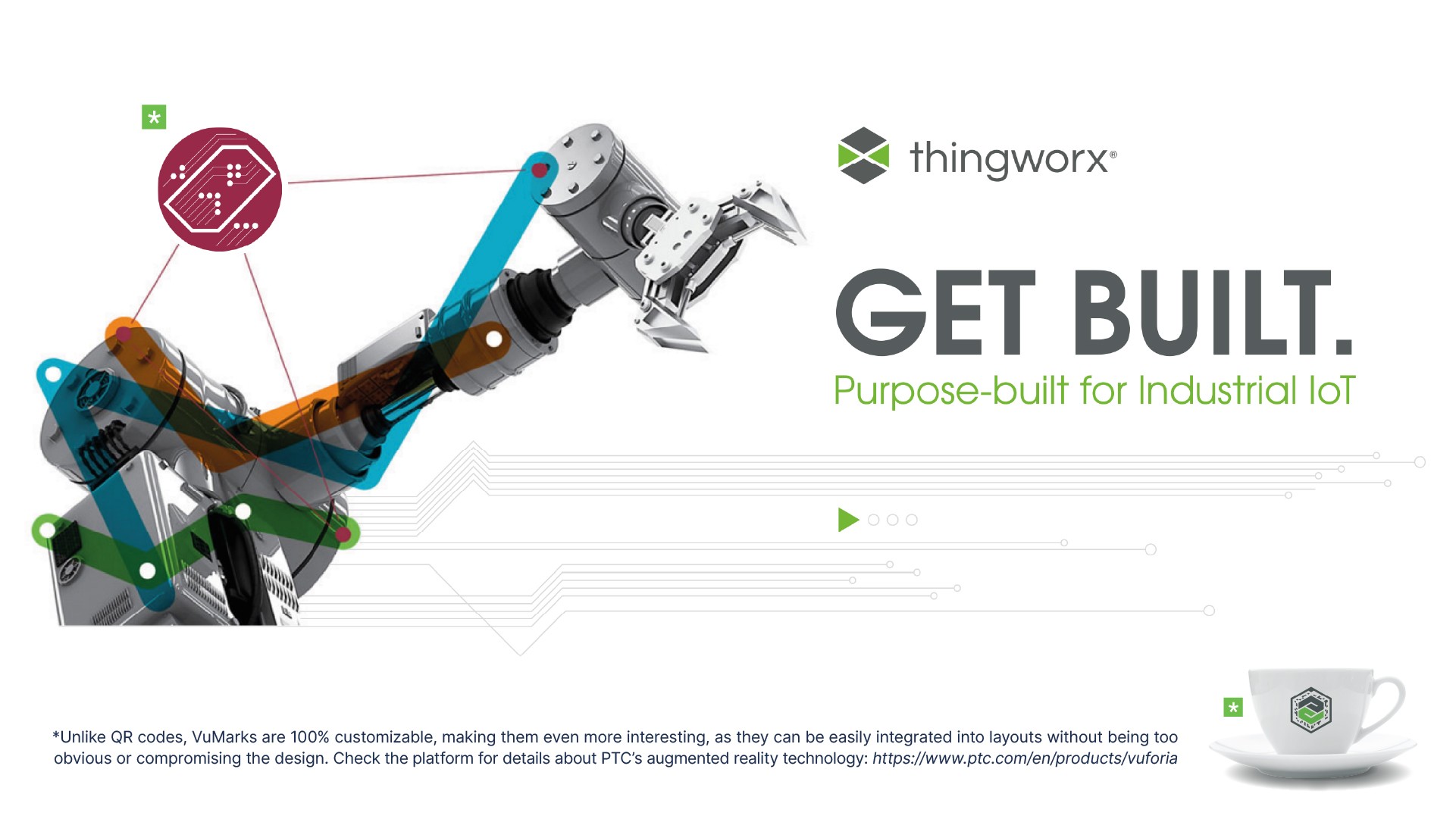
Hallways and doors: Full color palette, large-scale prints, confident typography, dynamic compositions. People move through here with energy and purpose. The design matches that. The story this space tells is: this company builds things that matter.
The shift between the two environments was deliberate. You felt the narrative change as you walked from one into the other.
PTC builds augmented reality tools used by manufacturers worldwide, yet nothing in their own office reflected their own product. I proposed embedding PTC's VuMarks (physical markers that trigger AR experiences) directly into the environmental design. Employees and visitors could point their devices at the walls and unlock interactive product demonstrations layered onto the physical space.
The office became a living demonstration of the brand's own technology. A space where the physical design and the digital experience told the same story simultaneously, not a showroom.
KEY DECISIONS
Cafeteria: Restrictive color palette, calm compositions, breathing room, because people rest here. The design supports that: no bold graphics competing for attention, no brand messaging from the walls. The story this space tells is: slow down.
Hallways and doors: Full color palette, large-scale prints, confident typography, dynamic compositions. People move through here with energy and purpose. The design matches that. The story this space tells is: this company builds things that matter.
The shift between the two environments was deliberate. You felt the narrative change as you walked from one into the other.
PTC builds augmented reality tools used by manufacturers worldwide, yet nothing in their own office reflected their own product. I proposed embedding PTC's VuMarks (physical markers that trigger AR experiences) directly into the environmental design. Employees and visitors could point their devices at the walls and unlock interactive product demonstrations layered onto the physical space.
The office became a living demonstration of the brand's own technology. A space where the physical design and the digital experience told the same story simultaneously, not a showroom.
RESULTS
The concept was adopted by PTC offices internationally. It transferred because it was built on principles, not decoration: start with people, let the environment tell a story, integrate technology where it amplifies meaning, and design systems, instead of one-off solutions.
RESULTS
The concept was adopted by PTC offices internationally. It transferred because it was built on principles, not decoration: start with people, let the environment tell a story, integrate technology where it amplifies meaning, and design systems, instead of one-off solutions.